Your page,out of 20.
Paste a link. Claude opens it on desktop and phone, scores 10 checks with the page’s own words as evidence, and writes the fixes, ready to paste.
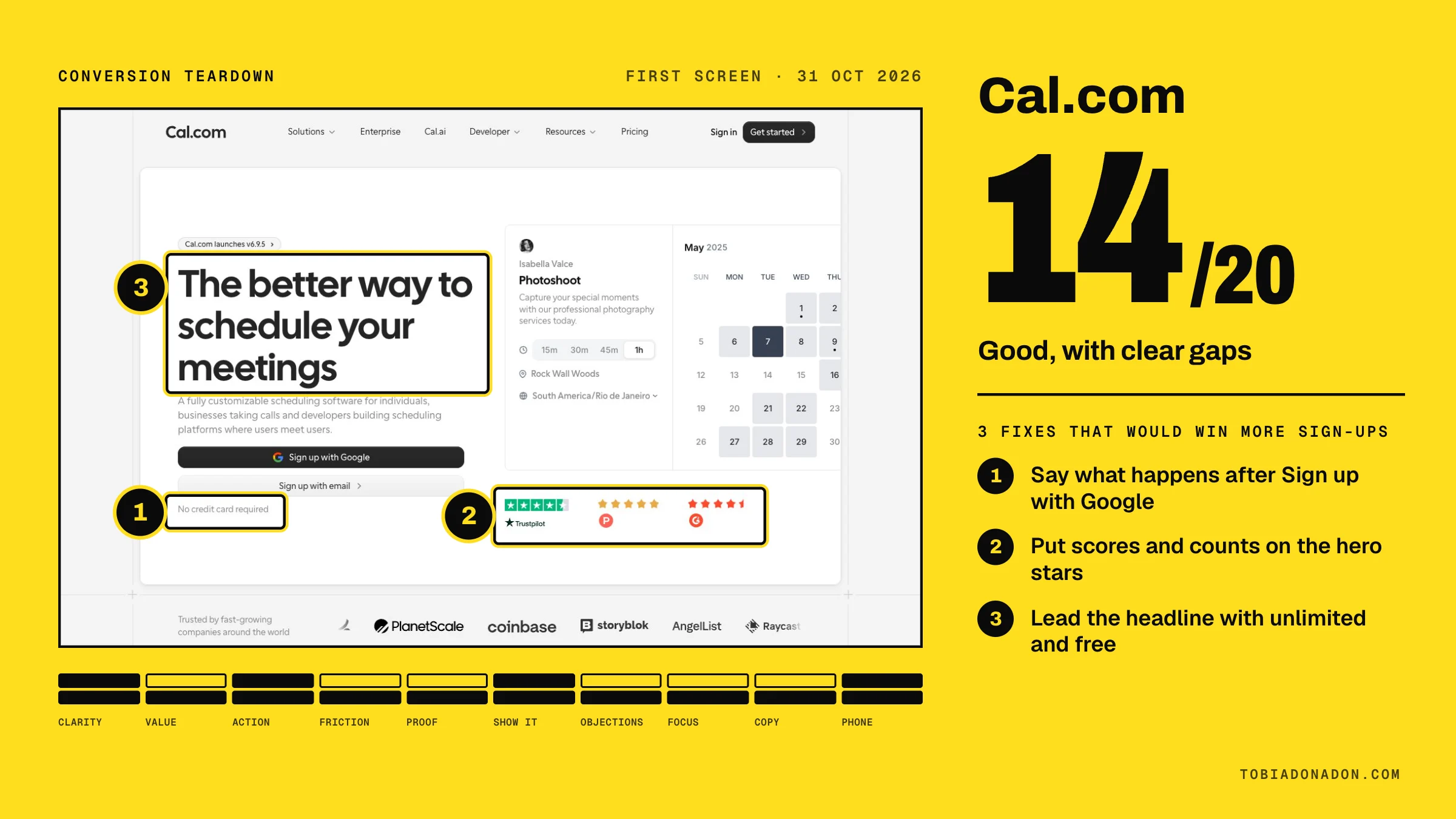
Ten questions every visitor asks.
Each scored 0, 1 or 2 against a fixed rubric. Every point needs evidence: a quote from the page or a number it measured. A quote that isn’t on the page word for word is refused.
- 01
Clarity
What is it, and is it for me?
2 of 2: A stranger gets what it is and who it's for in five seconds.
- 02
Value
Why should I care?
2 of 2: A specific outcome, and a reason it beats what they do now.
- 03
Main action
What do I do now?
2 of 2: One button that stands out, on desktop and on the phone.
- 04
Friction
What does yes cost me?
2 of 2: Free? Card? How long? Said right by the button.
- 05
Proof
Why should I believe you?
2 of 2: Named people, real numbers, early and next to the claims.
- 06
Show it
Show me, don't tell me.
2 of 2: The product doing its job, not decoration.
- 07
Objections
But what about …?
2 of 2: The real doubts answered where they come up.
- 08
Focus
One page, one job.
2 of 2: Everything pushes toward the one action.
- 09
Copy
Written for the reader?
2 of 2: The headings alone tell the story, in the customer's words.
- 10
Phone & speed
Does it work where people are?
2 of 2: The first phone screen works and loads fast.
A polished SaaS page usually lands between 11 and 15. With a TypeSafe key, Jev gives every page an independent second score, and the checks where the two disagree get a second look.
Not advice. The new words.
Every fix quotes what’s there, writes what should replace it, and says why. Ranked, so you know which three to do this week.
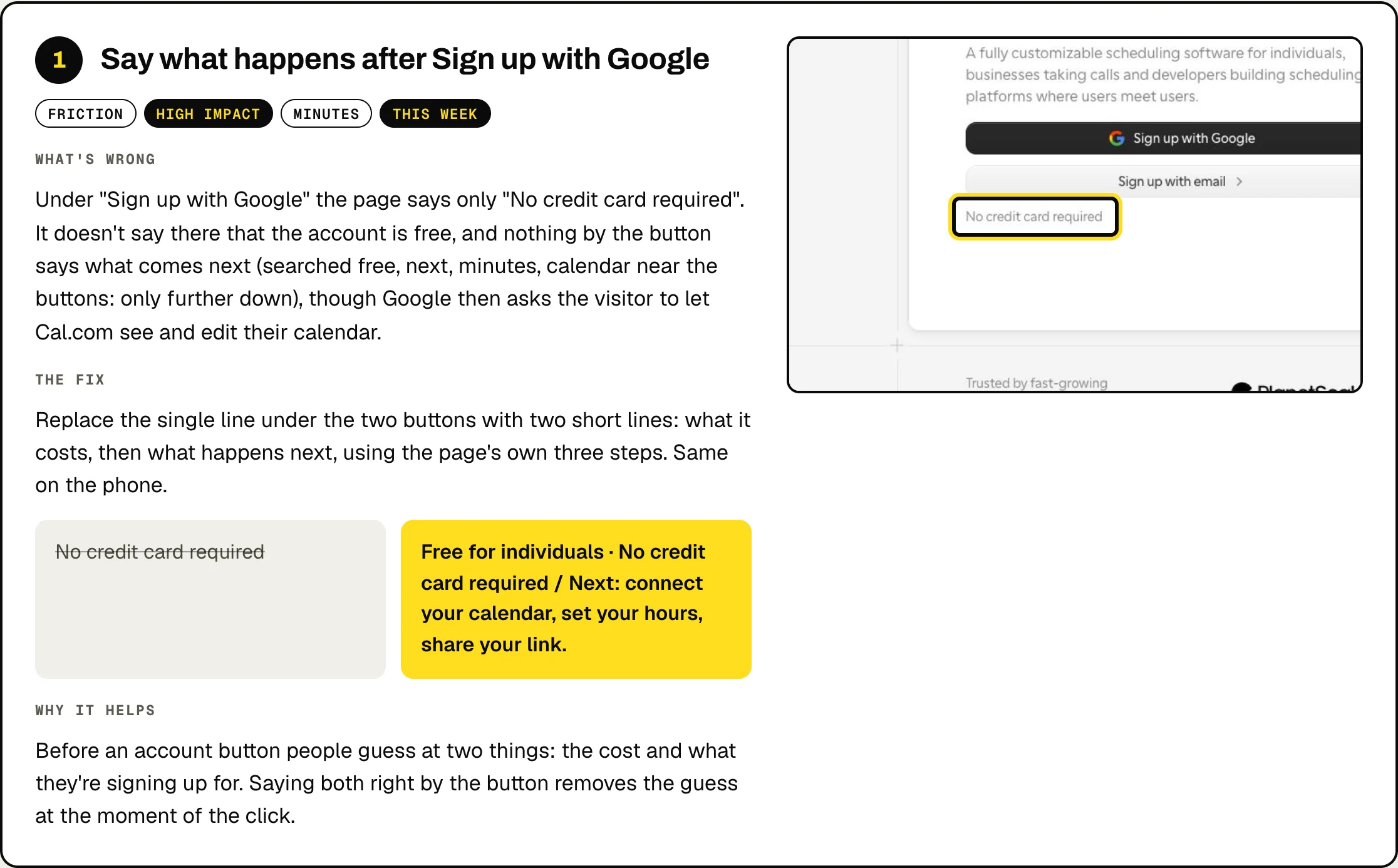
The score
Out of 20, each check with its evidence, and what the page already does well.
The fixes
5 to 8, ranked by impact and effort, the before and after written out.
Three new first screens
Headline, subhead and button, written three ways: outcome, edge, pain.
The cards
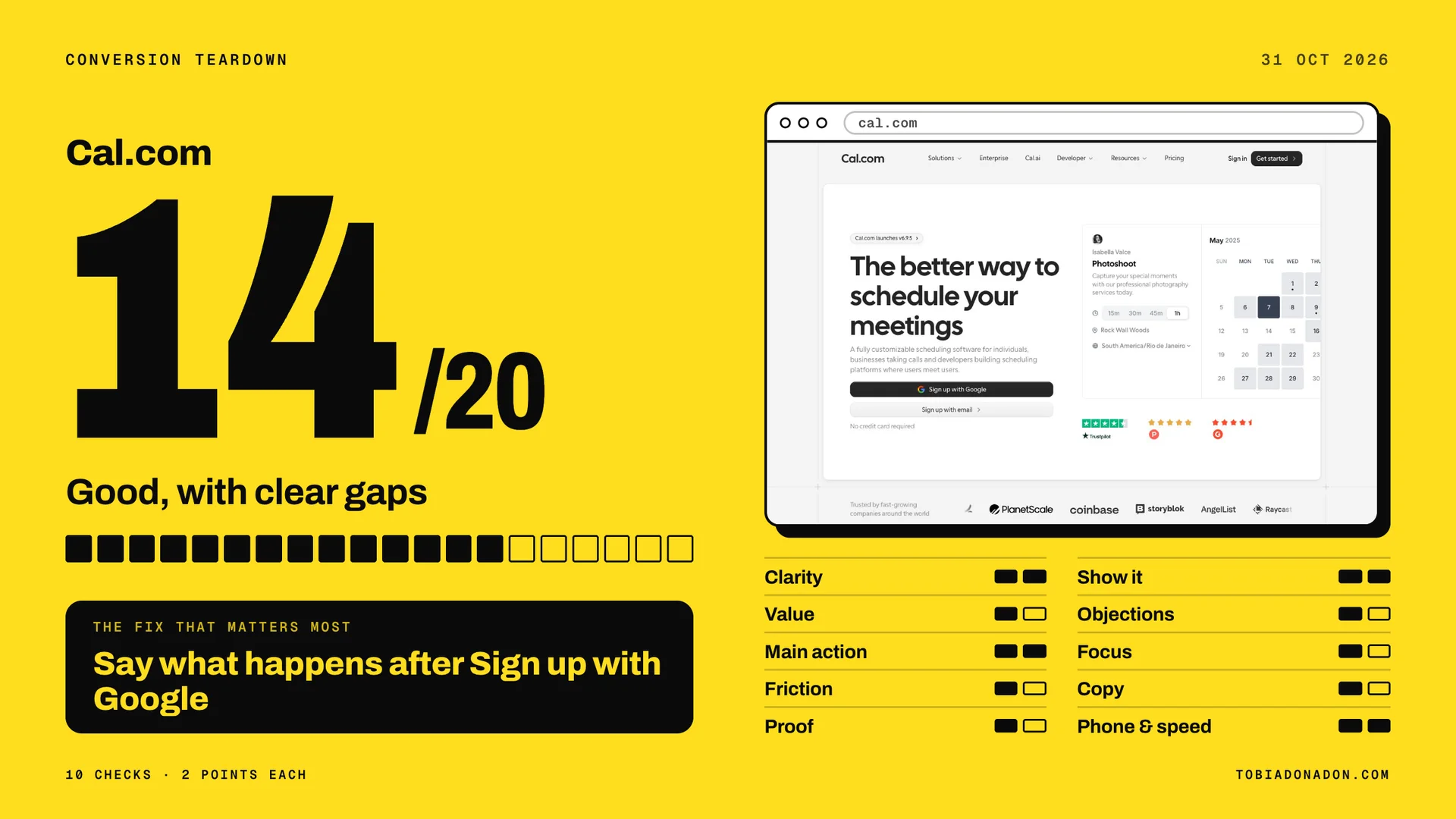
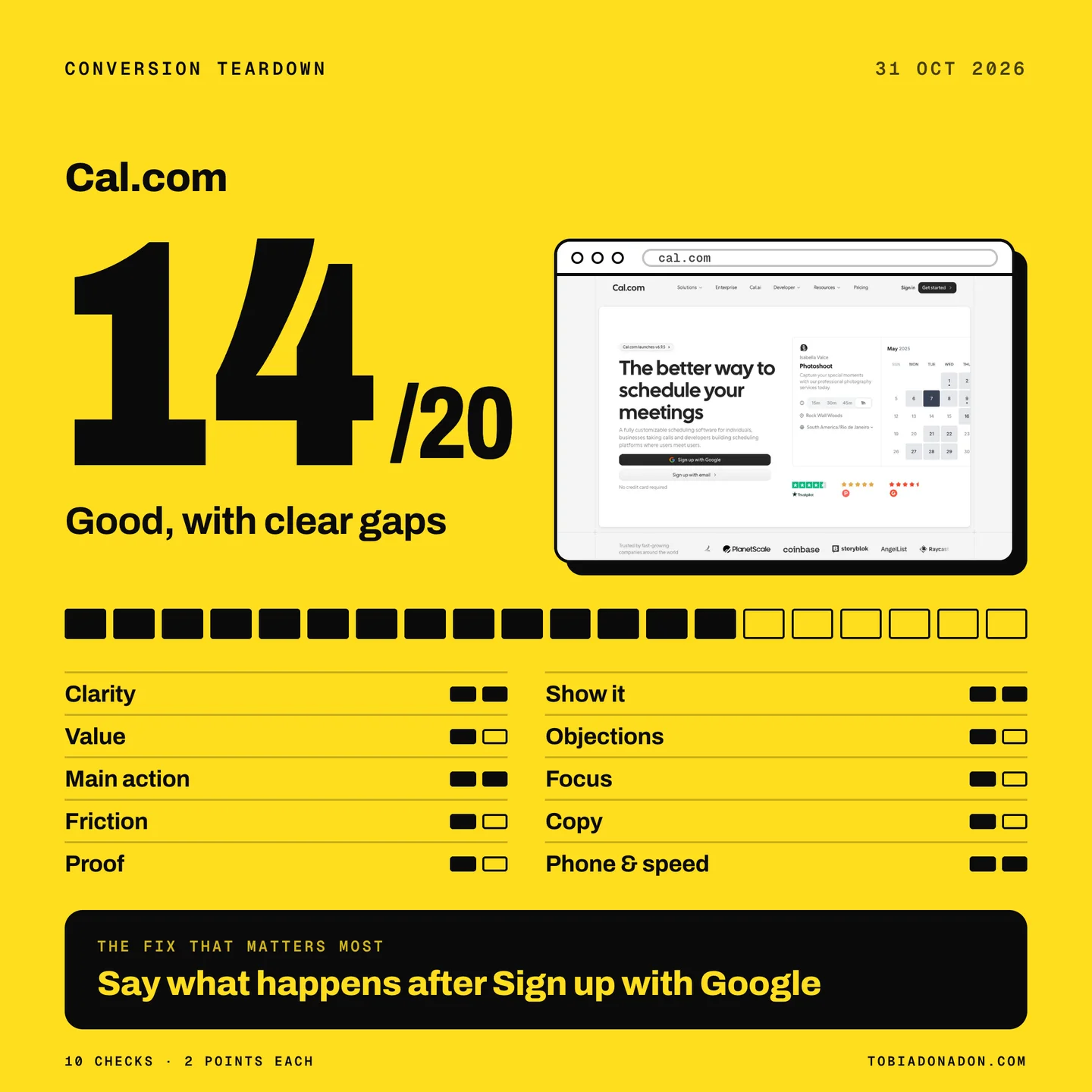
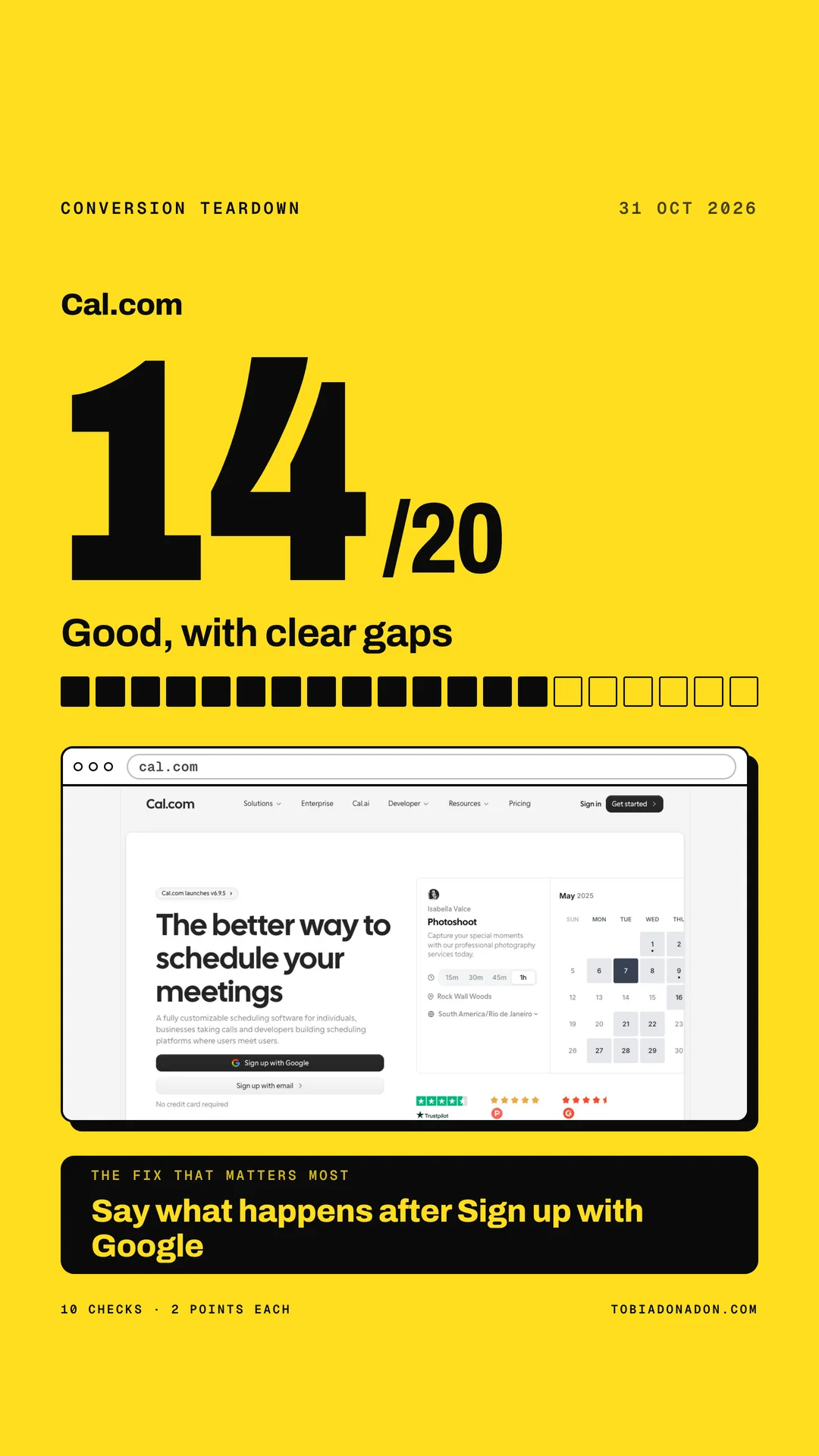
A roast card with numbered pins on what to fix, and the score as a poster to share.
Your score, ready to post.
Every teardown ends with the score as a poster, in three shapes (wide for X and LinkedIn, square for the feed, tall for Stories) and the post already written. Copy the words, add the poster, publish.
Then say what you want next.
“Fix it in my code.”
It makes the fixes in your project, runs it, photographs it and scores it again, then draws the before and after. It never pushes or deploys: you review and ship.
“Rewrite the whole page.”
Section by section, the current words and the new ones, in your voice, with your real facts. Anything only you know stays a [slot] until you fill it.
“Score every reply.”
Post a teardown, ask people for their links, paste them all. Each gets a score, a card and a short reply with its biggest fix.
“Me against my competitors.”
Your page and theirs on the same 10 checks, so you see exactly where they win and where you can.
Find the leak before you buy more traffic.
More visitors to a page that loses them only costs more. Three minutes tells you where they leave, and what to write instead.
- 1Get it free. It downloads at once.
- 2Open a terminal in the folder, type
claude
, thenhi
. It installs itself. - 3Type
tear down
and any link: yours, a competitor’s, or localhost.
Free. Needs Claude Code, Node.js 18+ and Chrome or Edge. Mac, Windows or Linux. The score is a judgment against a rubric, not a measured conversion rate: test the fixes on real traffic.